

Reading · Intermediate
Reading Compass: TOEFL Intensives: Level 4 Vol. 4
A structured reading program that develops advanced strategies for understanding complex passages and answering challenging reading questions.
Reading Compass: TOEFL Intensives: Level 4 Vol. 4

Reading Compass Level 4: Russia and Eastern Europe
Volume 4 – Developing Advanced Reading Skills
A structured reading program that develops advanced strategies for understanding complex passages and answering challenging reading questions.
Through engaging texts about Eastern European and Russian geography, history, culture, and people, students strengthen comprehension while expanding their vocabulary.
Curriculum
- Insert Text
- Sentence Simplification: Not Mentioned
- Sentence Simplification: Changed Information
- Schematic Table
- Reference
- Synonyms in Answer Choices
- Expressions and Sayings
- Author’s Tone
- Critical Analysis
- Review Test
Students learn to analyze complex information, recognize relationships between ideas, understand tone, and think critically about what they read.
Reading · Advanced
Reading Compass: TOEFL Intensives: Level 5 Vol. 1
A structured reading program designed to strengthen advanced comprehension and critical reading skills.
Reading Compass: TOEFL Intensives: Level 5 Vol. 1
Reading Compass Level 5: Volume 1
Building Advanced Reading Comprehension Skills
A structured reading program designed to strengthen advanced comprehension and critical reading skills.
Through challenging nonfiction passages, students develop stronger reading strategies while expanding their vocabulary and knowledge.
Curriculum
- Fact Retrieval
- According to
- According to + 5 Ws
- Fact Retrieval in Stories
- Negative Fact
- Listicles
- Skimming and Scanning Techniques
- Crossing Off Answers
- Crossing Off Answers for Negative Fact
- Fact Retrieval & Negative Fact Checklist
- Review Test
Students learn to analyze complex passages, connect ideas, evaluate information, and make well-supported conclusions.
Reading · Advanced
Reading Compass: TOEFL Intensives: Level 5 Vol. 2
A structured reading program that develops advanced comprehension, analysis, and critical reading skills through challenging passages.
Reading Compass: TOEFL Intensives: Level 5 Vol. 2
Reading Compass Level 5: Volume 2
Building Advanced Reading Comprehension Skills
A structured reading program that develops advanced comprehension, analysis, and critical reading skills through challenging passages.
Students strengthen their reading strategies while expanding vocabulary and learning about diverse topics and cultures.
Curriculum
- Adding Information
- Contrasting Information
- Examples
- Argumentative and Explanatory
- Cause and Effect
- Context Clues
- Synonyms
- Prefixes and Suffixes
- Paraphrasing
- Review Test
Students learn to recognize how ideas connect, use transition words to understand relationships between information, build vocabulary through context and word parts, paraphrase key ideas, and summarize what they read.
Reading · Advanced
Reading Compass: TOEFL Intensives: Level 5 Vol. 3
A structured reading program that develops advanced comprehension, inference, and critical thinking skills through increasingly challenging passages.
Reading Compass: TOEFL Intensives: Level 5 Vol. 3
Reading Compass Level 5: The Digital Revolution
Volume 3 – Developing Advanced Reading Skills
A structured reading program that develops advanced comprehension, inference, and critical thinking skills through increasingly challenging passages.
Students explore the digital revolution while learning to analyze information, recognize different perspectives, and evaluate ideas.
Curriculum
- Logical Conclusions
- Excluding Extremes
- Avoiding Negative Statements
- Rhetorical Purpose
- Synonyms in Answer Choices
- Critical Thinking & Analysis
- Pros vs. Cons
- Bias & Perspective
- Schematic Table
- Prose Summary
- Review Test
Students learn to draw logical conclusions, analyze arguments and perspectives, evaluate pros and cons, and summarize complex information.
Reading · Advanced
Reading Compass: TOEFL Intensives: Level 5 Vol. 4
A structured reading program that develops advanced comprehension and test-taking skills through challenging passages about technology and the future.
Reading Compass: TOEFL Intensives: Level 5 Vol. 4
Reading Compass Level 5: The Future of Technology
Volume 4 – Developing Advanced Reading Skills
A structured reading program that develops advanced comprehension and test-taking skills through challenging passages about technology and the future.
Students explore robots, AI, smart homes, space exploration, and emerging technologies while building vocabulary and critical reading skills.
Curriculum
- Main Topics
- Idioms and Collocations
- Opinion and Point of View
- Tone and Change of Tone
- Understanding Phrases
- Fill-in-the-Blank Vocabulary
- Choosing the Best Headline
- Logical Sentence Fill-In
- Logical Sentence Order
- Explicit vs. Implicit Information
- Review Test
Students learn to identify key ideas, understand nuanced language, recognize viewpoints and tone, organize information logically, and distinguish explicit from implicit meaning.
Grammar
Check Yourself
A practical language arts course focused on writing clearly, catching mistakes, and becoming a more independent learner.
Check Yourself
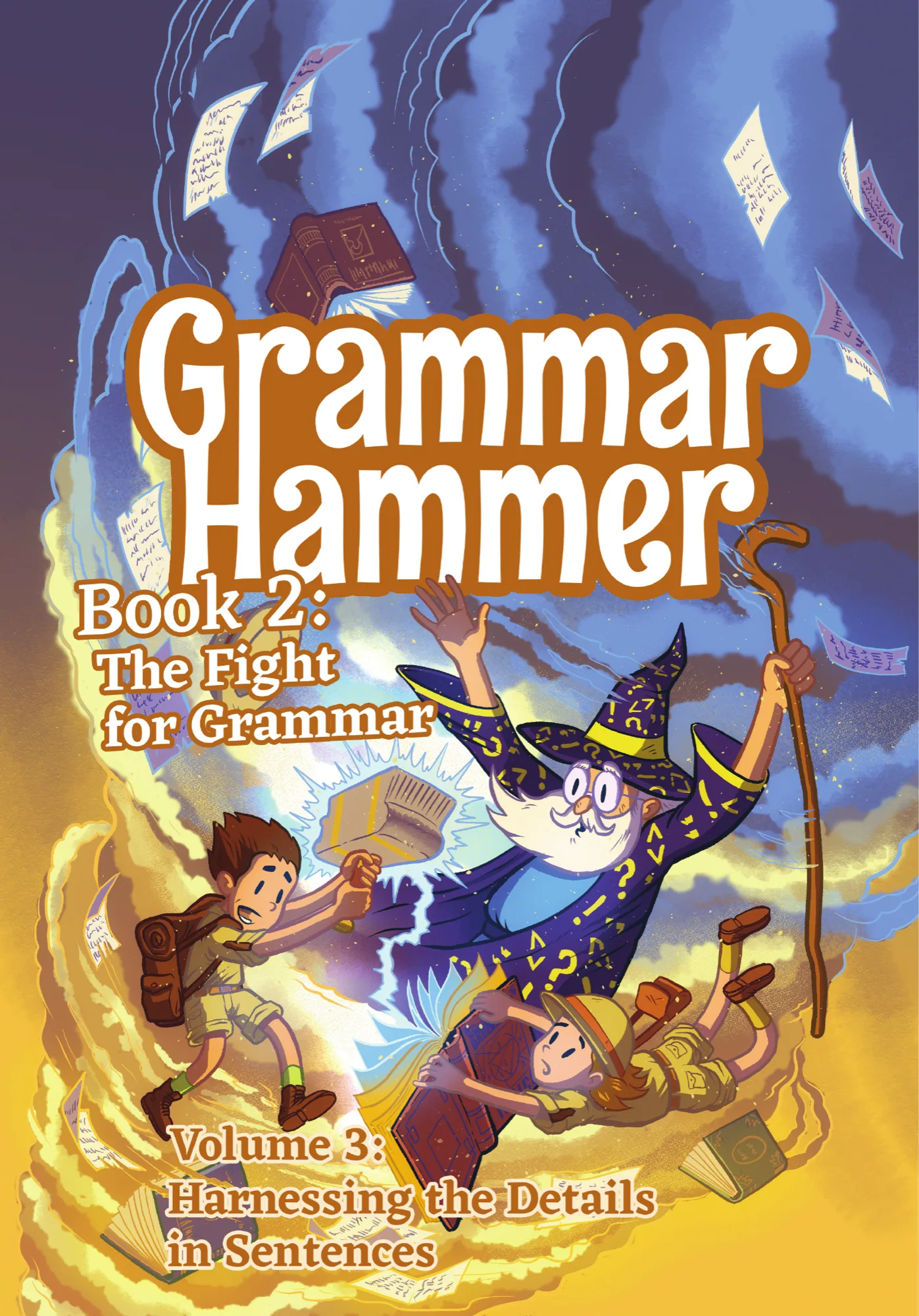
Check Yourself Book 1
Writing, Grammar, and Editing for Independent Learners
A practical language arts course focused on writing clearly, catching mistakes, and becoming a more independent learner.
Students build stronger writing habits while practicing grammar, reading, vocabulary, spelling, and self-editing.
Curriculum
- Complete sentences and detailed answers
- Comparatives and superlatives
- Parts of speech
- Verb tenses and adverbs
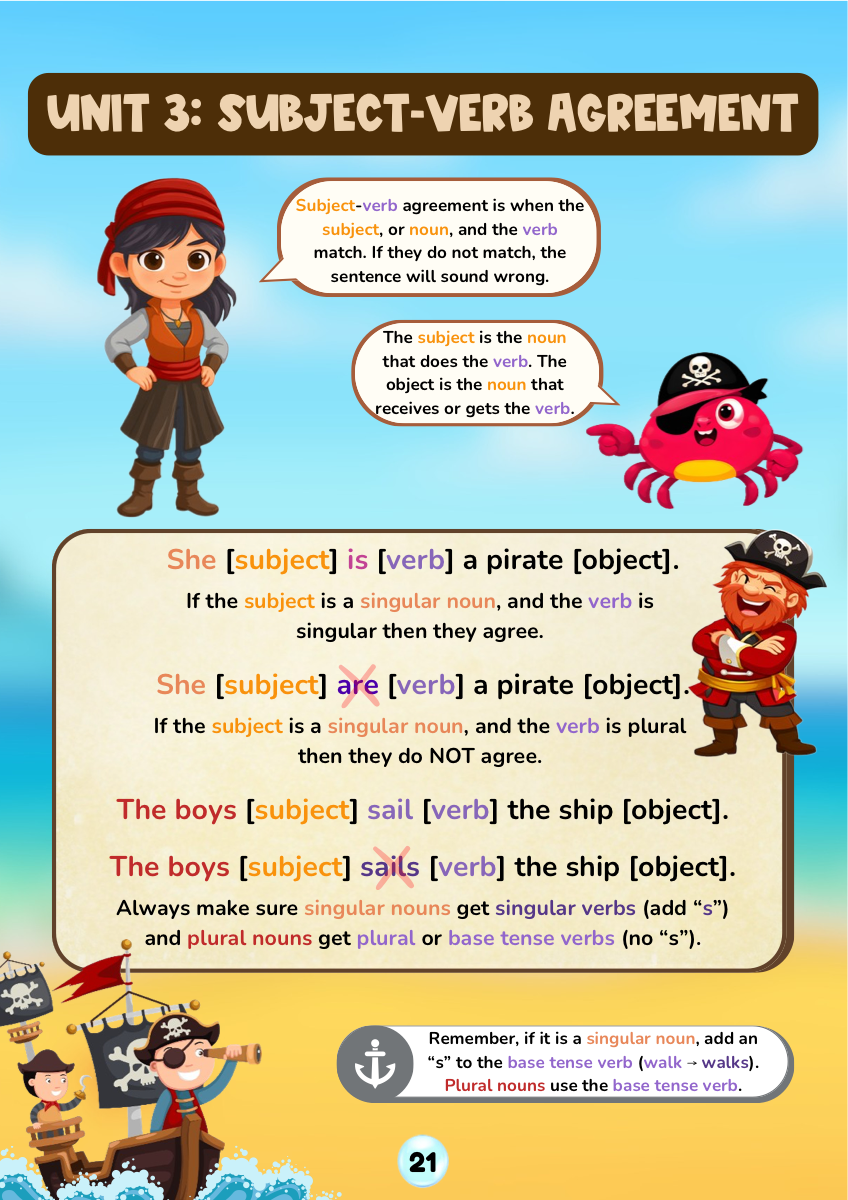
- Subject-verb agreement
- Homophones and spelling
- Punctuation and apostrophes
- Run-on sentences
- Context clues
- Quotations
- Cause and effect
- Editing and proofreading
- Critical thinking and guided writing
Students learn to write stronger responses, recognize mistakes, and improve their own work with greater confidence.
Writing
Writer’s Workshop
A step-by-step writing course that teaches students how to plan, organize, and write complete essays.
Writer’s Workshop
Writer's Workshop
A Beginner's Guide to Essay Writing
A step-by-step writing course that teaches students how to plan, organize, and write complete essays.
Students learn how to understand prompts, generate ideas, build introductions, develop body paragraphs, support opinions, and write effective conclusions. Each skill is taught separately before students combine them into full essays.
Curriculum
- Understanding essay prompts
- Key words and brainstorming
- Hooks and background information
- Thesis statements
- Topic sentences
- Supporting details and examples
- Body paragraph organization
- Conclusions
- Opinion and argument writing
- Essay planning and revision
- Five-paragraph essay structure
- Self-editing and writing checklists
Students build the thinking, organization, and writing skills needed to produce clear, structured essays independently.
Vocabulary
Cinnabunnies Book 1 Vol. 1: The Garden of Synonyms
Build a bigger vocabulary through stories, characters, and adventure.
Cinnabunnies Book 1 Vol. 1: The Garden of Synonyms
Cinnabunnies
The Cinnamon Book of Synonyms
Build a bigger vocabulary through stories, characters, and adventure.
Cinnabunnies is a story-based vocabulary course that helps young learners move beyond basic words and express themselves with richer, more precise language. Students follow Puff, Zoey, Butter, Hunny, Jelly, Cuppy, and their friends through the magical Cinnabunny world while learning synonyms through reading, spelling, comprehension, and writing.
Rather than memorizing isolated word lists, students meet new vocabulary in meaningful stories and then practice using it themselves.
Curriculum
Unit 1: Basic Adjectives
- Big vs. Small
- huge, large, giant, enormous, gigantic
- tiny, little, short, teeny, puny
- Good vs. Bad
- great, super, awesome, amazing, wonderful
- awful, terrible, horrible, nasty, dreadful
- Easy vs. Hard
- simple, breezy, smooth, no sweat, no problem
- difficult, tough, tricky, complex, puzzling
Unit 2: Feelings
- Happy vs. Sad
- joyful, excited, cheerful, jolly, content
- unhappy, blue, gloomy, tearful, down
- Excited vs. Mad
- thrilled, eager, pumped, giddy, overjoyed
- upset, angry, cross, annoyed, frustrated
- Nice vs. Mean
- kind, friendly, gentle, polite, caring
- unkind, hurtful, unfriendly, rude, grumpy
Unit 3: Personality
- Brave vs. Shy
- bold, fearless, strong, daring, confident
- timid, nervous, quiet, bashful, meek
- Smart vs. Not Smart
- clever, bright, sharp, wise, brainy
- dull, dense, silly, slow, goofy
- Fun vs. Boring
- joyful, playful, amusing, exciting, a blast
- dull, ho-hum, uninteresting, no fun, unexciting
Students Practice
- Vocabulary and synonyms
- Story-based reading comprehension
- Spelling
- Sentence writing
- Creative writing
- Descriptive and emotional language
- Cumulative vocabulary review
By the end of the course, students have a larger working vocabulary and more ways to express their ideas in both speaking and writing.
- Big vs. Small
Vocabulary
Cinnabunnies Book 1 Vol. 2: The Garden of Synonyms
Welcome to the sweet and magical world of the Cinnabunnies, where learning new words is as fun as exploring candy castles, soda pop seas, and chocolate kingdoms. In this vocabulary-building course,…
Cinnabunnies Book 1 Vol. 2: The Garden of Synonyms
Cinnabunnies Volume 1: The Cinnamon Book of Synonyms
Building Bigger Vocabulary Through Stories, Friendship, and Adventure
Welcome to the sweet and magical world of the Cinnabunnies, where learning new words is as fun as exploring candy castles, soda pop seas, and chocolate kingdoms. In this vocabulary-building course, students follow Puff, Zoey, Butter, Hunny, Jelly, Cuppy, and their friends as they learn powerful new synonyms through stories, games, spelling activities, reading comprehension, and creative writing.
Throughout the course, students expand their vocabulary by learning multiple ways to express common ideas and emotions. Instead of simply learning words like big, happy, or smart, students discover richer vocabulary such as enormous, joyful, clever, and fearless. By encountering these words repeatedly in stories, activities, and writing exercises, students build stronger reading comprehension and more expressive writing skills.
What Makes This Course Unique?
Vocabulary Through Storytelling
Every lesson takes place inside the whimsical world of the Cinnabunnies.
Students:
Meet memorable characters
- Explore magical locations
- Read short stories featuring target vocabulary
- Learn new words through meaningful contexts
- Apply vocabulary immediately through writing activities
Instead of memorizing isolated word lists, students learn vocabulary through characters and adventures they can connect with.
Learning Synonyms Naturally
Each lesson introduces a pair of opposite concepts and explores multiple synonyms for each.
For example:
Big → huge, enormous, gigantic
- Happy → joyful, cheerful, content
- Brave → fearless, daring, confident
- Smart → clever, wise, bright
Students learn that there are many ways to express similar ideas, helping them become more flexible and sophisticated communicators.
Multiple Opportunities for Practice
Every lesson includes:
Vocabulary introduction
- Fill-in-the-blank activities
- Story-based reading practice
- Reading comprehension questions
- Spelling reinforcement
- Creative writing exercises
This layered approach helps students move vocabulary from recognition to active use.
Writing From the Beginning
Students are encouraged to use newly learned words in their own writing.
Creative writing activities help students:
Practice sentence building
- Strengthen vocabulary retention
- Develop imagination
- Build confidence as writers
By regularly using new words in original writing, students gain ownership of their expanding vocabulary.
Built-In Review and Reinforcement
Each unit concludes with cumulative review activities that revisit previously learned words through:
Vocabulary substitution
- Multiple-choice questions
- Spelling practice
- Guided writing
This review structure helps ensure long-term retention rather than short-term memorization.
Lesson Breakdown
Unit 1: Basic Adjectives
Students learn synonyms for:
Lesson 1: Big vs. Small
Big:
Huge
- Large
- Giant
- Enormous
- Gigantic
Small:
Tiny
- Little
- Short
- Teeny
- Puny
Focus Skills:
Descriptive vocabulary
- Comparing size
- Synonym recognition
- Story-based comprehension
- Lesson 2: Good vs. Bad
Good:
Great
- Super
- Awesome
- Amazing
- Wonderful
Bad:
Awful
- Terrible
- Horrible
- Nasty
- Dreadful
Focus Skills:
Opinion words
- Positive and negative descriptions
- Expressive language
- Lesson 3: Easy vs. Hard
Easy:
Simple
- Breezy
- Smooth
- No Sweat
- No Problem
Hard:
Difficult
- Tough
- Tricky
- Complex
- Puzzling
Focus Skills:
Academic vocabulary
- Problem-solving language
- Describing challenges
- Unit 2: Feelings
Students learn vocabulary related to emotions and social interactions.
Lesson 1: Happy vs. Sad
Happy:
Joyful
- Excited
- Cheerful
- Jolly
- Content
Sad:
Unhappy
- Blue
- Gloomy
- Tearful
- Down
Focus Skills:
Emotional vocabulary
- Character feelings
- Reading emotional context
- Lesson 2: Excited vs. Mad
Excited:
Thrilled
- Eager
- Pumped
- Giddy
- Overjoyed
Mad:
Upset
- Angry
- Cross
- Annoyed
- Frustrated
Focus Skills:
Emotional expression
- Understanding reactions
- Expanding feeling words
- Lesson 3: Nice vs. Mean
Nice:
Kind
- Friendly
- Gentle
- Polite
- Caring
Mean:
Unkind
- Hurtful
- Unfriendly
- Rude
- Grumpy
Focus Skills:
Social-emotional learning
- Character traits
- Positive communication
- Unit 3: Personality
Students learn vocabulary used to describe people and behaviors.
Lesson 1: Brave vs. Shy
Brave:
Bold
- Fearless
- Strong
- Daring
- Confident
Shy:
Timid
- Nervous
- Quiet
- Bashful
- Meek
Focus Skills:
Personality vocabulary
- Character analysis
- Self-expression
- Lesson 2: Smart vs. Not Smart
Smart:
Clever
- Bright
- Sharp
- Wise
- Brainy
Not Smart:
Dull
- Dense
- Silly
- Slow
- Goofy
Focus Skills:
Describing thinking skills
- Character traits
- Vocabulary precision
- Lesson 3: Fun vs. Boring
Fun:
Joyful
- Playful
- Amusing
- Exciting
- A Blast
Boring:
Dull
- Ho Hum
- Uninteresting
- No Fun
- Unexciting
Focus Skills:
Describing experiences
- Opinion vocabulary
- Personal expression
- Educational Progression
- Stage 1
Basic Descriptive Vocabulary
⬇
Stage 2
Feelings and Emotions
⬇
Stage 3
Social and Character Traits
⬇
Stage 4
Personality and Self-Expression
⬇
Stage 5
Creative Vocabulary Usage
⬇
Stage 6
Independent Writing with Synonyms
Educational Purpose
The primary purpose of Cinnabunnies Volume 1 is to help students expand their expressive vocabulary through repeated exposure, contextual learning, and creative application.
Students learn how to:
Recognize and use synonyms
- Improve reading comprehension
- Strengthen writing skills
- Develop descriptive language
- Understand emotional vocabulary
- Express ideas with greater precision
- Build confidence as readers and writers
By the end of the course, students will have learned dozens of high-frequency vocabulary words and developed the ability to use richer language in both speaking and writing.
Ideal For
- Grades 1–4 ESL/EFL learners
- Emerging readers
- Vocabulary development programs
- Homeschool language arts instruction
- Students preparing for stronger reading and writing performance
- Learners who enjoy stories, characters, and imaginative worlds
Cinnabunnies Volume 1 transforms vocabulary study into an engaging adventure where every new word unlocks a bigger, brighter, and more expressive way to communicate.
Vocabulary
Cinnabunnies Book 1 Vol. 3: The Garden of Synonyms
Welcome to the sweet and magical world of the Cinnabunnies, where learning new words is as fun as exploring candy castles, soda pop seas, and chocolate kingdoms. In this vocabulary-building course,…
Cinnabunnies Book 1 Vol. 3: The Garden of Synonyms
Cinnabunnies Volume 1: The Cinnamon Book of Synonyms
Building Bigger Vocabulary Through Stories, Friendship, and Adventure
Welcome to the sweet and magical world of the Cinnabunnies, where learning new words is as fun as exploring candy castles, soda pop seas, and chocolate kingdoms. In this vocabulary-building course, students follow Puff, Zoey, Butter, Hunny, Jelly, Cuppy, and their friends as they learn powerful new synonyms through stories, games, spelling activities, reading comprehension, and creative writing.
Throughout the course, students expand their vocabulary by learning multiple ways to express common ideas and emotions. Instead of simply learning words like big, happy, or smart, students discover richer vocabulary such as enormous, joyful, clever, and fearless. By encountering these words repeatedly in stories, activities, and writing exercises, students build stronger reading comprehension and more expressive writing skills.
What Makes This Course Unique?
Vocabulary Through Storytelling
Every lesson takes place inside the whimsical world of the Cinnabunnies.
Students:
Meet memorable characters
- Explore magical locations
- Read short stories featuring target vocabulary
- Learn new words through meaningful contexts
- Apply vocabulary immediately through writing activities
Instead of memorizing isolated word lists, students learn vocabulary through characters and adventures they can connect with.
Learning Synonyms Naturally
Each lesson introduces a pair of opposite concepts and explores multiple synonyms for each.
For example:
Big → huge, enormous, gigantic
- Happy → joyful, cheerful, content
- Brave → fearless, daring, confident
- Smart → clever, wise, bright
Students learn that there are many ways to express similar ideas, helping them become more flexible and sophisticated communicators.
Multiple Opportunities for Practice
Every lesson includes:
Vocabulary introduction
- Fill-in-the-blank activities
- Story-based reading practice
- Reading comprehension questions
- Spelling reinforcement
- Creative writing exercises
This layered approach helps students move vocabulary from recognition to active use.
Writing From the Beginning
Students are encouraged to use newly learned words in their own writing.
Creative writing activities help students:
Practice sentence building
- Strengthen vocabulary retention
- Develop imagination
- Build confidence as writers
By regularly using new words in original writing, students gain ownership of their expanding vocabulary.
Built-In Review and Reinforcement
Each unit concludes with cumulative review activities that revisit previously learned words through:
Vocabulary substitution
- Multiple-choice questions
- Spelling practice
- Guided writing
This review structure helps ensure long-term retention rather than short-term memorization.
Lesson Breakdown
Unit 1: Basic Adjectives
Students learn synonyms for:
Lesson 1: Big vs. Small
Big:
Huge
- Large
- Giant
- Enormous
- Gigantic
Small:
Tiny
- Little
- Short
- Teeny
- Puny
Focus Skills:
Descriptive vocabulary
- Comparing size
- Synonym recognition
- Story-based comprehension
- Lesson 2: Good vs. Bad
Good:
Great
- Super
- Awesome
- Amazing
- Wonderful
Bad:
Awful
- Terrible
- Horrible
- Nasty
- Dreadful
Focus Skills:
Opinion words
- Positive and negative descriptions
- Expressive language
- Lesson 3: Easy vs. Hard
Easy:
Simple
- Breezy
- Smooth
- No Sweat
- No Problem
Hard:
Difficult
- Tough
- Tricky
- Complex
- Puzzling
Focus Skills:
Academic vocabulary
- Problem-solving language
- Describing challenges
- Unit 2: Feelings
Students learn vocabulary related to emotions and social interactions.
Lesson 1: Happy vs. Sad
Happy:
Joyful
- Excited
- Cheerful
- Jolly
- Content
Sad:
Unhappy
- Blue
- Gloomy
- Tearful
- Down
Focus Skills:
Emotional vocabulary
- Character feelings
- Reading emotional context
- Lesson 2: Excited vs. Mad
Excited:
Thrilled
- Eager
- Pumped
- Giddy
- Overjoyed
Mad:
Upset
- Angry
- Cross
- Annoyed
- Frustrated
Focus Skills:
Emotional expression
- Understanding reactions
- Expanding feeling words
- Lesson 3: Nice vs. Mean
Nice:
Kind
- Friendly
- Gentle
- Polite
- Caring
Mean:
Unkind
- Hurtful
- Unfriendly
- Rude
- Grumpy
Focus Skills:
Social-emotional learning
- Character traits
- Positive communication
- Unit 3: Personality
Students learn vocabulary used to describe people and behaviors.
Lesson 1: Brave vs. Shy
Brave:
Bold
- Fearless
- Strong
- Daring
- Confident
Shy:
Timid
- Nervous
- Quiet
- Bashful
- Meek
Focus Skills:
Personality vocabulary
- Character analysis
- Self-expression
- Lesson 2: Smart vs. Not Smart
Smart:
Clever
- Bright
- Sharp
- Wise
- Brainy
Not Smart:
Dull
- Dense
- Silly
- Slow
- Goofy
Focus Skills:
Describing thinking skills
- Character traits
- Vocabulary precision
- Lesson 3: Fun vs. Boring
Fun:
Joyful
- Playful
- Amusing
- Exciting
- A Blast
Boring:
Dull
- Ho Hum
- Uninteresting
- No Fun
- Unexciting
Focus Skills:
Describing experiences
- Opinion vocabulary
- Personal expression
- Educational Progression
- Stage 1
Basic Descriptive Vocabulary
⬇
Stage 2
Feelings and Emotions
⬇
Stage 3
Social and Character Traits
⬇
Stage 4
Personality and Self-Expression
⬇
Stage 5
Creative Vocabulary Usage
⬇
Stage 6
Independent Writing with Synonyms
Educational Purpose
The primary purpose of Cinnabunnies Volume 1 is to help students expand their expressive vocabulary through repeated exposure, contextual learning, and creative application.
Students learn how to:
Recognize and use synonyms
- Improve reading comprehension
- Strengthen writing skills
- Develop descriptive language
- Understand emotional vocabulary
- Express ideas with greater precision
- Build confidence as readers and writers
By the end of the course, students will have learned dozens of high-frequency vocabulary words and developed the ability to use richer language in both speaking and writing.
Ideal For
- Grades 1–4 ESL/EFL learners
- Emerging readers
- Vocabulary development programs
- Homeschool language arts instruction
- Students preparing for stronger reading and writing performance
- Learners who enjoy stories, characters, and imaginative worlds
Cinnabunnies Volume 1 transforms vocabulary study into an engaging adventure where every new word unlocks a bigger, brighter, and more expressive way to communicate.
Vocabulary
Cinnabunnies Book 1 Vol. 4: The Garden of Synonyms
Welcome to the sweet and magical world of the Cinnabunnies, where learning new words is as fun as exploring candy castles, soda pop seas, and chocolate kingdoms. In this vocabulary-building course,…
Cinnabunnies Book 1 Vol. 4: The Garden of Synonyms
Cinnabunnies Volume 1: The Cinnamon Book of Synonyms
Building Bigger Vocabulary Through Stories, Friendship, and Adventure
Welcome to the sweet and magical world of the Cinnabunnies, where learning new words is as fun as exploring candy castles, soda pop seas, and chocolate kingdoms. In this vocabulary-building course, students follow Puff, Zoey, Butter, Hunny, Jelly, Cuppy, and their friends as they learn powerful new synonyms through stories, games, spelling activities, reading comprehension, and creative writing.
Throughout the course, students expand their vocabulary by learning multiple ways to express common ideas and emotions. Instead of simply learning words like big, happy, or smart, students discover richer vocabulary such as enormous, joyful, clever, and fearless. By encountering these words repeatedly in stories, activities, and writing exercises, students build stronger reading comprehension and more expressive writing skills.
What Makes This Course Unique?
Vocabulary Through Storytelling
Every lesson takes place inside the whimsical world of the Cinnabunnies.
Students:
Meet memorable characters
- Explore magical locations
- Read short stories featuring target vocabulary
- Learn new words through meaningful contexts
- Apply vocabulary immediately through writing activities
Instead of memorizing isolated word lists, students learn vocabulary through characters and adventures they can connect with.
Learning Synonyms Naturally
Each lesson introduces a pair of opposite concepts and explores multiple synonyms for each.
For example:
Big → huge, enormous, gigantic
- Happy → joyful, cheerful, content
- Brave → fearless, daring, confident
- Smart → clever, wise, bright
Students learn that there are many ways to express similar ideas, helping them become more flexible and sophisticated communicators.
Multiple Opportunities for Practice
Every lesson includes:
Vocabulary introduction
- Fill-in-the-blank activities
- Story-based reading practice
- Reading comprehension questions
- Spelling reinforcement
- Creative writing exercises
This layered approach helps students move vocabulary from recognition to active use.
Writing From the Beginning
Students are encouraged to use newly learned words in their own writing.
Creative writing activities help students:
Practice sentence building
- Strengthen vocabulary retention
- Develop imagination
- Build confidence as writers
By regularly using new words in original writing, students gain ownership of their expanding vocabulary.
Built-In Review and Reinforcement
Each unit concludes with cumulative review activities that revisit previously learned words through:
Vocabulary substitution
- Multiple-choice questions
- Spelling practice
- Guided writing
This review structure helps ensure long-term retention rather than short-term memorization.
Lesson Breakdown
Unit 1: Basic Adjectives
Students learn synonyms for:
Lesson 1: Big vs. Small
Big:
Huge
- Large
- Giant
- Enormous
- Gigantic
Small:
Tiny
- Little
- Short
- Teeny
- Puny
Focus Skills:
Descriptive vocabulary
- Comparing size
- Synonym recognition
- Story-based comprehension
- Lesson 2: Good vs. Bad
Good:
Great
- Super
- Awesome
- Amazing
- Wonderful
Bad:
Awful
- Terrible
- Horrible
- Nasty
- Dreadful
Focus Skills:
Opinion words
- Positive and negative descriptions
- Expressive language
- Lesson 3: Easy vs. Hard
Easy:
Simple
- Breezy
- Smooth
- No Sweat
- No Problem
Hard:
Difficult
- Tough
- Tricky
- Complex
- Puzzling
Focus Skills:
Academic vocabulary
- Problem-solving language
- Describing challenges
- Unit 2: Feelings
Students learn vocabulary related to emotions and social interactions.
Lesson 1: Happy vs. Sad
Happy:
Joyful
- Excited
- Cheerful
- Jolly
- Content
Sad:
Unhappy
- Blue
- Gloomy
- Tearful
- Down
Focus Skills:
Emotional vocabulary
- Character feelings
- Reading emotional context
- Lesson 2: Excited vs. Mad
Excited:
Thrilled
- Eager
- Pumped
- Giddy
- Overjoyed
Mad:
Upset
- Angry
- Cross
- Annoyed
- Frustrated
Focus Skills:
Emotional expression
- Understanding reactions
- Expanding feeling words
- Lesson 3: Nice vs. Mean
Nice:
Kind
- Friendly
- Gentle
- Polite
- Caring
Mean:
Unkind
- Hurtful
- Unfriendly
- Rude
- Grumpy
Focus Skills:
Social-emotional learning
- Character traits
- Positive communication
- Unit 3: Personality
Students learn vocabulary used to describe people and behaviors.
Lesson 1: Brave vs. Shy
Brave:
Bold
- Fearless
- Strong
- Daring
- Confident
Shy:
Timid
- Nervous
- Quiet
- Bashful
- Meek
Focus Skills:
Personality vocabulary
- Character analysis
- Self-expression
- Lesson 2: Smart vs. Not Smart
Smart:
Clever
- Bright
- Sharp
- Wise
- Brainy
Not Smart:
Dull
- Dense
- Silly
- Slow
- Goofy
Focus Skills:
Describing thinking skills
- Character traits
- Vocabulary precision
- Lesson 3: Fun vs. Boring
Fun:
Joyful
- Playful
- Amusing
- Exciting
- A Blast
Boring:
Dull
- Ho Hum
- Uninteresting
- No Fun
- Unexciting
Focus Skills:
Describing experiences
- Opinion vocabulary
- Personal expression
- Educational Progression
- Stage 1
Basic Descriptive Vocabulary
⬇
Stage 2
Feelings and Emotions
⬇
Stage 3
Social and Character Traits
⬇
Stage 4
Personality and Self-Expression
⬇
Stage 5
Creative Vocabulary Usage
⬇
Stage 6
Independent Writing with Synonyms
Educational Purpose
The primary purpose of Cinnabunnies Volume 1 is to help students expand their expressive vocabulary through repeated exposure, contextual learning, and creative application.
Students learn how to:
Recognize and use synonyms
- Improve reading comprehension
- Strengthen writing skills
- Develop descriptive language
- Understand emotional vocabulary
- Express ideas with greater precision
- Build confidence as readers and writers
By the end of the course, students will have learned dozens of high-frequency vocabulary words and developed the ability to use richer language in both speaking and writing.
Ideal For
- Grades 1–4 ESL/EFL learners
- Emerging readers
- Vocabulary development programs
- Homeschool language arts instruction
- Students preparing for stronger reading and writing performance
- Learners who enjoy stories, characters, and imaginative worlds
Cinnabunnies Volume 1 transforms vocabulary study into an engaging adventure where every new word unlocks a bigger, brighter, and more expressive way to communicate.
Grammar · Basic
Grammar Hammer Adventures: Book 1: Vol 1
A fantasy grammar adventure built around the foundations of English.
Grammar Hammer Adventures: Book 1: Vol 1



Grammar Hammer Book 1: The Quest Begins
Volume 1 – Nouns and Pronouns
A fantasy grammar adventure built around the foundations of English.
Students join Stan, Jan, and Wordy the Wise on a quest to stop Erazer Head while learning essential grammar through an ongoing story. Each lesson combines instruction, practice, and adventure to make grammar more memorable and meaningful.
Curriculum
- Parts of speech
- Nouns and articles
- Singular and plural nouns
- Irregular plurals
- Subject pronouns
- Pronouns with be verbs
- Negative be verbs
- Apostrophes and contractions
- Possessives
- Cumulative review
- Students build the grammar foundation needed for stronger reading, writing, and speaking.
Grammar · Basic
Grammar Hammer Adventures Book 1: Vol 2
Grammar Hammer Book 2 continues the adventure of Stan, Jan, and Wordy the Wise as they search for the giant letters "B" and "E" to unlock the power of the legendary Grammar Hammer. Along the way, s…
Grammar Hammer Adventures Book 1: Vol 2
Grammar Hammer Book 1: The Power of Description and Questions
Volume 2 – Adjectives, Questions, and Prepositions
Grammar Hammer Book 2 continues the adventure of Stan, Jan, and Wordy the Wise as they search for the giant letters “B” and “E” to unlock the power of the legendary Grammar Hammer. Along the way, students learn how to describe nouns with adjectives, ask increasingly detailed questions, and use prepositions to explain time, place, and relationships between objects.
As the heroes travel across deserts, circuses, haunted houses, and mysterious worlds, students develop essential sentence-building skills that help them communicate more clearly and confidently in English. Every grammar concept becomes a practical tool that helps the characters move closer to stopping the evil Erazer Head and restoring order to Planet ABC-123456789.
What Makes This Book Unique?
Grammar Through Storytelling
Rather than learning grammar through disconnected worksheets, students learn alongside recurring characters in an ongoing fantasy adventure.
Students:
Follow Stan, Jan, and Wordy the Wise on their quest
- Raise and train an Adj-Dragon
- Search for the giant letters “B” and “E”
- Solve grammar challenges that advance the story
- Discover how grammar helps restore order to Planet ABC-123456789
The narrative framework gives students a meaningful reason to engage with grammar concepts and creates stronger retention through context.
A Focus on Descriptive Language
This volume introduces students to the power of adjectives and detailed communication.
Students learn how to:
Describe people, places, and objects
- Use adjectives with be verbs
- Place adjectives before nouns
- Identify and compare objects using demonstrative adjectives
These skills help students create richer and more precise sentences.
Building Strong Question Skills
Students move beyond simple statements and learn how to ask effective questions.
They learn:
Be verb questions
- Yes/No questions
- WH-questions
- WH-questions with prepositions
These structures help students participate in conversations, gather information, and strengthen reading comprehension.
Grammar for Real Communication
Every lesson emphasizes how grammar is used in everyday communication.
Students learn how to:
Ask for information
- Describe locations
- Explain time and place
- Clarify meaning
- Give more detailed responses
- Communicate accurately and confidently
Grammar is presented as a tool for communication rather than a collection of isolated rules.
Structured Skill Progression
Each lesson builds naturally on previous concepts.
Students progress from:
Adjectives
⬇
Descriptive Sentences
⬇
Be Verb Questions
⬇
Yes/No Questions
⬇
WH Questions
⬇
Prepositions
⬇
Time and Place Expressions
This progression allows students to develop increasingly sophisticated communication skills while maintaining confidence and mastery.
Lesson Breakdown
Unit 1: Be Verbs + Adjectives
Students learn:
Adjectives
- Sensory descriptions
- Be verbs with adjectives
Skills:
Describing appearance, feelings, and characteristics
- Using adjectives in complete sentences
- Connecting adjectives to the five senses
Story Focus:
Stan, Jan, and Wordy discover a mysterious Adj-Dragon egg while searching for the giant “B.”
Unit 2: Adjectives Before a Noun
Students learn:
Adjective placement
Descriptive noun phrases
Skills:
Using adjectives before nouns
- Expanding sentence detail
- Creating more vivid descriptions
Examples include:
colorful egg
- shy dragon
- smart dragon
- giant cactus
- Unit 3: Demonstrative Adjectives
Students learn:
this
- that
- these
- those
Skills:
Identifying singular and plural nouns
- Distinguishing between near and far objects
- Matching demonstrative adjectives with nouns
Story Focus:
Multiple Adj-Dragons hatch, and students learn how to identify and describe them correctly.
Unit 4: Review Quiz
Students review:
Adjectives
- Be verbs
- Demonstrative adjectives
Skills:
Grammar application
- Sentence building
- Cumulative review
- Unit 5: Be Verb Questions
Students learn:
Am I…?
- Is he…?
- Are they…?
Skills:
Transforming statements into questions
- Asking about people, places, and situations
- Gathering information through questioning
Story Focus:
Goldie the Adj-Dragon only understands questions that begin with be verbs.
Unit 6: Yes/No Questions
Students learn:
Do
- Does
- Did
- Is
- Are
- Can
- Will
- Have
Skills:
Forming yes/no questions
- Confirming information
- Understanding question structure across multiple tenses
Story Focus:
The giant “B” only answers with yes or no, forcing students to improve their questioning skills.
Unit 7: The Five W Questions
Students learn:
Who
- What
- When
- Where
- Why
Skills:
Gathering detailed information
- Strengthening comprehension
- Asking meaningful questions
Story Focus:
The giant “B” begins providing clues about the missing giant “E.”
Unit 8: Review Quiz
Students review:
Be verb questions
- Yes/No questions
- WH questions
Skills:
Question formation
- Grammar accuracy
- Independent application
- Unit 9: WH Questions + Prepositions
Students learn:
who … with?
- where … from?
- what … about?
- who … to?
Skills:
Asking more specific questions
- Understanding relationships and locations
- Expanding question complexity
Story Focus:
The search for the giant “E” leads the heroes to a circus and a haunted house.
Unit 10: Prepositions in Statements
Students learn:
in
- on
- under
- over
- between
- against
- by
- with
Skills:
Describing location
- Understanding spatial relationships
- Building more precise sentences
- Unit 11: Time and Place with Prepositions
Students learn:
in
- on
- at
Skills:
Talking about dates
- Talking about time
- Talking about locations
Examples include:
in summer
- on Monday
- at 7:00
Story Focus:
The heroes finally find the giant “E” and prepare to reunite him with the giant “B.”
Educational Progression
Stage 1
Descriptive Language
⬇
Stage 2
Adjectives and Nouns
⬇
Stage 3
Demonstrative Adjectives
⬇
Stage 4
Be Verb Questions
⬇
Stage 5
Yes/No Questions
⬇
Stage 6
WH Questions
⬇
Stage 7
Prepositions
⬇
Stage 8
Time and Place Expressions
Educational Purpose
The primary purpose of Grammar Hammer Book 2 is to help students move beyond basic sentence construction and begin communicating with greater precision and detail.
Students learn how to:
Describe nouns accurately
- Use adjectives naturally
- Ask meaningful questions
- Gather information through conversation
- Understand location and direction
- Use prepositions correctly
- Communicate more effectively in spoken and written English
By mastering these skills, students build a stronger foundation for reading comprehension, writing, speaking, and future grammar study.
Ideal For
- Elementary ESL/EFL learners
- Students transitioning from foundational grammar to sentence expansion
- Homeschool language arts programs
- Supplementary grammar instruction
- Learners developing conversation skills
- Students who enjoy story-based learning
- Young readers preparing for more advanced grammar and writing instruction
Grammar Hammer Book 2 combines grammar instruction, storytelling, and communication practice into a structured adventure that helps students develop both grammatical accuracy and practical language skills.
Grammar · Basic
Grammar Hammer Adventures Book 1: Vol 3
Grammar Hammer Book 3 continues the journey of Stan, Jan, and Wordy the Wise as they move closer than ever to finding the legendary Grammar Hammer. Along the way, students learn how English uses pr…
Grammar Hammer Adventures Book 1: Vol 3
Grammar Hammer Book 1: The Search for the Grammar Hammer
Volume 3 – Pronouns, Existence, and Conjunctions
Grammar Hammer Book 3 continues the journey of Stan, Jan, and Wordy the Wise as they move closer than ever to finding the legendary Grammar Hammer. Along the way, students learn how English uses pronouns to talk about weather, time, animals, plants, and objects. They also master sentence patterns with there is and there are, learn how to ask questions about existence, and discover how conjunctions connect ideas together.
As the adventure unfolds through deserts, caves, ancient ruins, magical tunnels, and forgotten palaces, students develop stronger sentence-building skills while learning how grammar helps people describe the world, explain ideas, and connect information clearly. Every new grammar concept becomes a tool that helps the heroes move one step closer to stopping Erazer Head and restoring grammar to Planet ABC-123456789.
What Makes This Book Unique?
Grammar Through Adventure
Grammar Hammer continues its story-driven approach by turning grammar into a quest rather than a collection of worksheets.
Students:
Travel with Stan, Jan, and Wordy the Wise
- Meet magical creatures and ancient guardians
- Explore caves, deserts, palaces, and libraries
- Solve grammar challenges to advance the story
- Search for the legendary Grammar Hammer
Each grammar lesson directly supports the larger narrative, helping students understand grammar in context.
Expanding Sentence Building Skills
This volume introduces several sentence structures that students use constantly in real communication.
Students learn how to:
Talk about weather and time
- Describe animals, plants, and objects using pronouns
- Explain what exists and where things are
- Connect ideas with conjunctions
- Express reasons, results, and purposes
These skills help students move from simple sentences toward more sophisticated communication.
Connecting Grammar to Real Language
Students learn grammar as a tool for expressing ideas rather than simply memorizing rules.
They practice how to:
Describe daily situations
- Explain causes and effects
- Give reasons
- Ask questions
- Discuss existence and location
- Connect multiple ideas within a sentence
The result is stronger speaking, writing, and reading comprehension skills.
A Focus on Logical Thinking
Many of the lessons teach students how ideas connect.
Students learn:
Cause and effect
- Purpose and intention
- Comparison and contrast
- Choice and alternatives
- Existence and location
These skills support both grammar development and critical thinking.
Structured Skill Progression
Each unit builds upon previously learned concepts.
Students progress from:
Pronouns and Weather
⬇
Pronouns and Time
⬇
Singular and Plural References
⬇
Existence Statements
⬇
Existence Questions
⬇
Negative Existence
⬇
Basic Conjunctions
⬇
Cause and Effect
⬇
Purpose and Intent
This progression helps students build increasingly complex and natural English sentences.
Lesson Breakdown
Unit 1: “It” for Weather
Students learn:
- It is sunny.
- It is cloudy.
- It is raining.
- It is snowing.
Skills:
Describing weather conditions
- Using “it” as a placeholder subject
- Forming weather statements and questions
Story Focus:
The giant “BE” demonstrates its power by transforming into weather phenomena and teaching students how English describes weather.
Unit 2: “It” for Time
Students learn:
- It is morning.
- It is lunchtime.
- It is time to leave.
- It has been a long time.
Skills:
Talking about time and schedules
- Describing times of day
- Discussing duration and activities
Story Focus:
Stan and Jan continue their journey through the desert while learning how English uses “it” to talk about time.
Unit 3: “It” and “They” for Animals, Plants, and Objects
Students learn:
- It is a fox.
- It is a cactus.
- They are foxes.
- They are cacti.
Skills:
Singular and plural pronouns
- Subject-pronoun agreement
- Describing objects, animals, and plants
Story Focus:
The heroes meet the mysterious desert fox and follow clues that may lead them to the Grammar Hammer.
Unit 4: Review Quiz
Students review:
It for weather
- It for time
- It and they for nouns
Skills:
Pronoun mastery
- Sentence construction
- Grammar review
- Unit 5: There Is, There Are
Students learn:
- There is a cactus.
- There are camels.
- There is treasure.
- There are many clues.
Skills:
Expressing existence
- Distinguishing singular and plural nouns
- Introducing information clearly
Story Focus:
Inside a treasure-filled cave, students learn how to describe what exists around them.
Unit 6: Is There, Are There?
Students learn:
Is there a flower?
- Are there footprints?
- Is there a way out?
- Are there animals nearby?
Skills:
Asking questions about existence
- Using singular and plural forms correctly
- Gathering information
Story Focus:
The heroes become lost inside a magical cave and must use grammar to find their way out.
Unit 7: Isn’t There, Aren’t There?
Students learn:
- There isn’t any milk.
- There aren’t any cookies.
- Isn’t there a clue?
- Aren’t there any signs?
Skills:
Negative statements
- Negative questions
- Contractions
- Understanding absence and nonexistence
Story Focus:
A magical tunnel challenges the heroes to master negative existence forms before they can escape.
Unit 8: Review Quiz
Students review:
There is / There are
- Is there / Are there
- Isn’t there / Aren’t there
Skills:
Question formation
- Sentence accuracy
- Grammar application
- Unit 9: And, But, Or
Students learn:
and
- but
- or
Skills:
Combining ideas
- Showing contrast
- Presenting choices
- Building compound sentences
Story Focus:
A magic genie teaches the heroes important lessons about conjunctions while helping them search for the Grammar Hammer.
Unit 10: So, Because
Students learn:
Cause and effect relationships
- Giving reasons
- Explaining actions
Examples include:
- I was thirsty, so I drank water.
- I smiled because I was happy.
Skills:
Logical sentence building
- Explaining ideas
- Understanding reasons and results
Story Focus:
The Grammar Hammer begins to reveal its power as students learn how ideas connect through cause and effect.
Unit 11: So, So That
Students learn:
so
so that
Skills:
Expressing purpose
- Explaining goals and intentions
- Distinguishing between result and purpose
Examples include:
- It was hot, so we drank water.
- We brought umbrellas so that we would stay dry.
Story Focus:
The heroes discover clues leading toward the Time Gate and prepare for their eventual confrontation with Erazer Head.
Educational Progression
Stage 1
Weather and Time Expressions
⬇
Stage 2
Pronouns for Objects and Animals
⬇
Stage 3
Existence Statements
⬇
Stage 4
Existence Questions
⬇
Stage 5
Negative Existence
⬇
Stage 6
Basic Conjunctions
⬇
Stage 7
Cause and Effect
⬇
Stage 8
Purpose and Intent
Educational Purpose
The primary purpose of Grammar Hammer Book 3 is to help students develop more natural and connected English sentences.
Students learn how to:
Use pronouns accurately
- Describe weather and time
- Express existence and location
- Ask questions about what exists
- Create negative statements and questions
- Connect ideas with conjunctions
- Explain reasons and results
- Express goals and purposes
By mastering these structures, students strengthen their reading comprehension, speaking ability, writing fluency, and overall grammatical confidence.
Ideal For
- Elementary ESL/EFL learners
- Students transitioning from foundational grammar to paragraph-level writing
- Homeschool language arts programs
- Supplementary grammar instruction
- Learners developing stronger sentence-combining skills
- Students preparing for more advanced grammar and composition
- Young readers who enjoy story-based learning
Grammar Hammer Book 3 combines grammar instruction, storytelling, and communication practice into a structured adventure that helps students understand not only how English works, but why grammar matters when expressing ideas clearly and effectively.
Grammar · Basic
Grammar Hammer Adventures Book 1: Vol 4
A story-based grammar adventure focused on verb tenses and stronger sentence description.
Grammar Hammer Adventures Book 1: Vol 4
Grammar Hammer Book 1: Tenses, Adverbs, and Time Travel
Volume 4 – Present Tense, Past Tense, Adverbs, and Qualifiers
A story-based grammar adventure focused on verb tenses and stronger sentence description.
Students continue the journey with Stan, Jan, and Wordy the Wise while learning how to talk about routines, past events, frequency, and how actions happen.
Curriculum
- Simple present tense
- Present-tense questions
- Regular past tense
- Irregular past tense
- Past-tense questions
- Adverbs
- Adverbs of frequency
- Qualifiers
- Cumulative review
Students practice describing routines, asking questions, talking about the past, and writing more detailed and expressive sentences.
Grammar · Basic
Grammar Hammer Adventures Book 2: Vol 1
A time-travel grammar adventure focused on verb tenses and questions.
Grammar Hammer Adventures Book 2: Vol 1
Grammar Hammer Book 2: The Fight for Grammar
Volume 1 – Past, Present, and Future Tenses
A time-travel grammar adventure focused on verb tenses and questions.
Students continue the journey with Stan, Jan, and Wordy the Wise while learning how English describes actions in the past, present, and future. Through time travel, futuristic worlds, and grammar challenges, students build stronger tense control and sentence fluency.
Curriculum
- * Core grammar review
- * Simple present tense
- * Subject-verb agreement
- * WH- questions with **do / does**
- * Present progressive tense
- * Future tense with **will** and **going to**
- * Future expressions with **may, might, if, before, after**
- * Regular past tense
- * Irregular past tense
- * Past progressive tense
- * Cumulative review
Students practice describing actions across time, asking questions, making predictions, and writing more accurate and detailed sentences.
Grammar · Basic
Grammar Hammer Adventures Book 2: Vol 2
A story-based grammar adventure focused on nouns, quantity, and location.
Grammar Hammer Adventures Book 2: Vol 2
Grammar Hammer Book 2: The Fight for Grammar
Volume 2 – Countables, Quantifiers, and Prepositions
A story-based grammar adventure focused on nouns, quantity, and location.
Students continue the battle against Erazer Head while exploring the moon and learning how to describe amounts, use prepositions, and understand different types of nouns.
Curriculum
- Countable and uncountable nouns
- Many / much
- Some / any
- Quantifiers and quantity expressions
- In, on, at for time
- In, on, at for place
- Prepositions of location
- Irregular plural nouns
- Concrete and abstract nouns
- Common and proper nouns
- Cumulative review
Students practice describing quantity, time, place, and noun types with greater grammatical accuracy.
Grammar · Basic
Grammar Hammer Adventures Book 2: Vol 3
A story-based grammar adventure focused on description, comparison, and stronger sentence building.
Grammar Hammer Adventures Book 2: Vol 3
Grammar Hammer Book 2: The Fight for Grammar
Volume 3 – Harnessing the Details in Sentences
A story-based grammar adventure focused on description, comparison, and stronger sentence building.
Students continue the battle against Erazer Head while learning how to add detail, compare ideas, and combine sentences with greater accuracy and variety.
Curriculum
- Adjectives
- Adverbs of manner
- Adverbs of time
- Quantities and degrees
- Comparatives
- Superlatives
- Compound sentences
- Conjunctions
- Conditional structures
- Complex sentences
- Cumulative review
Students practice writing richer, longer, and more precise sentences while building the grammar skills needed for stronger reading and writing.
Grammar · Basic
Grammar Hammer Adventures Book 2: Vol 4
A story-based grammar adventure focused on practical communication and stronger writing.
Grammar Hammer Adventures Book 2: Vol 4
Grammar Hammer Book 2: The Fight for Grammar
Volume 4 – Helping Verbs, Requests, and Punctuation
A story-based grammar adventure focused on practical communication and stronger writing.
Students continue the fight against Ms. Incorrecta while learning how to make requests, express obligations, offer suggestions, and improve punctuation and sentence style.
Curriculum
- Could
- Would
- Perfect modals
- Polite requests
- Must / have to
- Making suggestions
- Quotation marks and dialogue
- Commas in lists
- Order of adjectives
- Cumulative review
Students practice communicating more politely, writing dialogue correctly, and building clearer, more natural sentences.
Grammar · Intermediate
Grammar Hammer Adventures Book 3: Vol 1
A story-based grammar adventure focused on detail, quantity, and precision.
Grammar Hammer Adventures Book 3: Vol 1
Grammar Hammer Book 3: The Journey to Atlantis Academy
Volume 1 – Specific Nouns, Quantifiers, and Prepositions
A story-based grammar adventure focused on detail, quantity, and precision.
Students continue the journey with Stan, Jan, and Wordy the Wise as they chase The Scribbler through icy landscapes and strange new worlds while learning how to make sentences more specific and accurate.
Curriculum
- General vs. specific nouns
- Countable and uncountable nouns
- Quantifiers
- Abstract and concrete nouns
- Adverbs of frequency
- Qualifiers
- Prepositions of time
- Prepositions of place
- Cumulative review
Students practice describing amounts, routines, time, place, and ideas with greater clarity and precision.
Grammar · Intermediate
Grammar Hammer Adventures Book 3: Vol 2
A story-based grammar adventure focused on sentence detail, tone, and stronger word choice.
Grammar Hammer Adventures Book 3: Vol 2
Grammar Hammer Book 3: The Journey to Atlantis Academy
Volume 2 – Adverbs and Powerful Pronouns
A story-based grammar adventure focused on sentence detail, tone, and stronger word choice.
Students continue the journey beneath the ocean while learning how to use parts of speech, adverbs, modifiers, and pronouns to make their writing more precise and expressive.
Curriculum
- Parts of speech review
- Changing and modifying parts of speech
- Adverbs of manner
- Adverbs of time, place, and frequency
- Adverbs of degree
- Tone and nuance
- Too, enough, not enough
- Indefinite pronouns
- Cumulative review
Students practice adding detail, controlling tone, and expressing ideas with greater clarity and precision.
Grammar · Intermediate
Grammar Hammer Adventures Book 3: Vol 3
A story-based grammar adventure focused on timelines, duration, and advanced verb tenses.
Grammar Hammer Adventures Book 3: Vol 3
Grammar Hammer Book 3: The Journey to Atlantis Academy
Volume 3 – Past, Present, and Future Perfect Tenses
A story-based grammar adventure focused on timelines, duration, and advanced verb tenses.
Students explore Atlantis Academy with Stan, Jan, and Wordy the Wise while learning how to connect events across time and describe completed or ongoing actions more precisely.
Curriculum
- Has / have
- Present perfect tense
- Ever / never
- Past perfect tense
- Future perfect tense
- Perfect tense questions
- For / since
- Perfect continuous tenses
- Past participles
- Timeline sequencing
- Cumulative review
Students practice organizing events, discussing experiences, and writing with greater control over time and sequence.
Grammar · Intermediate
Grammar Hammer Adventures Book 3: Vol 4
A story-based grammar adventure focused on expressing ideas, connecting information, and building stronger sentences.
Grammar Hammer Adventures Book 3: Vol 4
Grammar Hammer Book 3: The Journey to Atlantis Academy
Volume 4 – The Past That Continues Into the Present
A story-based grammar adventure focused on expressing ideas, connecting information, and building stronger sentences.
Stan, Jan, and Wordy the Wise face an exciting battle against The Scribbler at Atlantis Academy while learning to make descriptions more expressive, discuss possibilities, and connect ideas clearly.
Curriculum
- Exaggerations
- Generalizations
- Hypothetical situations
- Transitions
- Numbers, dates, rankings, and times
- Demonstrative pronouns
- Relative pronouns
- Prepositional relative clauses
- Cumulative review
Students learn to add detail, compare ideas, express possibilities, and connect sentences to make their communication more precise and sophisticated.
Grammar · Intermediate
Grammar Hammer Adventures Book 4: Vol 1
A story-based grammar adventure focused on tense mastery, past habits, and gerunds.
Grammar Hammer Adventures Book 4: Vol 1
Grammar Hammer Book 4: Blast from the Past
Volume 1 – The Grammar Time Warp
A story-based grammar adventure focused on tense mastery, past habits, and gerunds.
Students continue the journey with Stan, Jan, and Wordy the Wise as they investigate a rewritten past and travel through time while strengthening advanced verb and sentence skills.
Curriculum
- Irregular past tense
- Present tense review
- Past tense review
- Future tense review
- Used to vs. would
- Generalizations about the past
- Gerunds
- Adverbs of frequency with gerunds
- Advanced gerund phrases
- Cumulative review
Students practice writing about time, habits, historical events, and ongoing actions with greater accuracy and flexibility.
Grammar · Intermediate
Grammar Hammer Adventures Book 4: Vol 2
A time-travel grammar adventure focused on modals, possibility, and advanced communication.
Grammar Hammer Adventures Book 4: Vol 2
Grammar Hammer Book 4: Blast from the Past
Volume 2 – The Grammar of What Might Be
A time-travel grammar adventure focused on modals, possibility, and advanced communication.
Students continue the journey through the past while learning how to express regret, preferences, possibility, necessity, requests, and logical deductions.
Curriculum
- Could have, would have, should have
- Just / about to
- Deferred plans and regrets
- Preferences
- Possibility and ability
- Necessity
- Prohibition
- Suggestions, permissions, and requests
- Probability and deductions
- Cumulative review
- Students practice expressing ideas with greater nuance, politeness, and logical precision.
Grammar · Intermediate
Grammar Hammer Adventures Book 4: Vol 3
A time-travel grammar adventure focused on complex clauses, formal expression, and reported speech.
Grammar Hammer Adventures Book 4: Vol 3
Grammar Hammer Book 4: Blast from the Past
Volume 3 – Caveman Clauses: What They Really Meant
A time-travel grammar adventure focused on complex clauses, formal expression, and reported speech.
Students travel to the Stone Age with Stan, Jan, and Wordy the Wise while learning how to express thoughts, purposes, questions, suggestions, and reported information more clearly.
Curriculum
- Noun clauses with that
- So that for purpose
- Infinitive clauses with to
- Indirect questions
- If / whether
- Defining and specifying clauses
- Subjunctive mood
- Direct and reported speech
- Quotation marks for tone and emphasis
- Cumulative review
Students practice combining ideas, reporting information, and writing more sophisticated sentences with greater clarity and control.
Grammar · Intermediate
Grammar Hammer Adventures Book 4: Vol 4
A story-based grammar adventure focused on building stronger sentences and expressing conditions, possibilities, and regrets.
Grammar Hammer Adventures Book 4: Vol 4
Grammar Hammer Book 4: Blast from the Past
Volume 4 – The Cave of Consequences
A story-based grammar adventure focused on building stronger sentences and expressing conditions, possibilities, and regrets.
Stan, Jan, and Wordy the Wise travel back to the Stone Age, where they meet Cave Grump and uncover a surprising connection to the future.
Curriculum
- Parallel structure
- Coordinating conjunctions
- Correlative conjunctions
- Determiners vs. pronouns
- Adverb conditional clauses
- Reduced adverb clauses
- Real and unreal conditions
- Regret and negative outcomes
- Wish vs. hope
- Cumulative review
Students practice expressing ideas, consequences, regrets, and hopes with greater clarity and confidence.
Grammar · Advanced
Grammar Hammer Adventures Book 5: Vol 1
A story-based grammar adventure focused on commas, sentence flow, and clearer writing.
Grammar Hammer Adventures Book 5: Vol 1
Grammar Hammer Book 5: Planet Perfecta
Volume 1 – The Comma Code
A story-based grammar adventure focused on commas, sentence flow, and clearer writing.
Students travel to Planet Perfecta with Stan, Jan, and Wordy the Wise while learning how punctuation helps connect ideas, add detail, and make writing easier to understand.
Curriculum
- Commas in a series
- Compound sentences with FANBOYS
- Introductory words and phrases
- Interjections
- Dependent clauses
- Essential vs. nonessential clauses
- Appositives
- Direct address
- Tag questions
- Cumulative review
Students practice combining ideas, improving sentence flow, and using commas with greater accuracy and control.
Grammar · Advanced
Grammar Hammer Adventures Book 5: Vol 2
A story-based grammar adventure focused on advanced comma use, clarity, and polished writing.
Grammar Hammer Adventures Book 5: Vol 2
Grammar Hammer Book 5: Planet Perfecta
Volume 2 – The Comma Matrix
A story-based grammar adventure focused on advanced comma use, clarity, and polished writing.
Students continue the journey on Planet Perfecta while confronting Arti, an AI that wants to eliminate commas. Along the way, they learn how punctuation controls meaning, rhythm, and clarity.
Curriculum
- Commas with dates
- Commas with addresses
- Commas with quotations
- Coordinate adjectives
- The Oxford comma
- Contrasting elements
- Commas to prevent confusion
- Too, also, either
- Parenthetical expressions
- Cumulative review
Students practice using commas to make writing clearer, more precise, and more natural.
Grammar · Advanced
Grammar Hammer Adventures Book 5: Vol 3
A story-based grammar adventure focused on advanced punctuation and polished writing.
Grammar Hammer Adventures Book 5: Vol 3
Grammar Hammer Book 5: Planet Perfecta
Volume 3 – Marks that Matter
A story-based grammar adventure focused on advanced punctuation and polished writing.
Students continue across Planet Perfecta while learning how punctuation controls clarity, meaning, tone, and sentence flow.
Curriculum
- Periods, run-ons, and fragments
- Abbreviations
- Embedded questions
- Exclamation marks
- Apostrophes for possession and contractions
- Colons
- Quotation marks for dialogue and titles
- Semicolons
- Conjunctive adverbs
- Cumulative review
Students practice correcting sentence errors, punctuating dialogue, showing possession, and connecting ideas with greater accuracy and sophistication.
Grammar · Advanced
Grammar Hammer Adventures Book 5: Vol 4
A story-based grammar adventure focused on punctuation, editing, and the symbols we use to communicate.
Grammar Hammer Adventures Book 5: Vol 4
Grammar Hammer Book 5 Volume 4
Volume 4 – Symbols of the System
A story-based grammar adventure focused on punctuation, editing, and the symbols we use to communicate.
Stan, Jan, and Wordy the Wise enter a giant computer world where Alpha 1 challenges them to master the symbols controlling the system. Along the way, students discover how symbols add meaning and clarity to everyday communication.
Curriculum
- Parentheses
- Dashes
- Ellipses
- Brackets
- @ and # symbols
- Currency and percent symbols
- Asterisks and ampersands
- Etc.
- Cumulative review
Students learn to use symbols purposefully, edit with greater accuracy, and understand how small marks can change meaning and strengthen communication.
Reading · Basic
Reading Compass: TOEFL Intensives: Level 1 Vol. 1
A structured reading comprehension program focused on developing the step-by-step skills students need to understand passages and answer reading questions accurately.
Reading Compass: TOEFL Intensives: Level 1 Vol. 1
Reading Compass Level 1: World Biomes
Volume 1 – Building Essential Reading Skills
A structured reading comprehension program focused on developing the step-by-step skills students need to understand passages and answer reading questions accurately.
Through engaging nonfiction texts about deserts, oceans, mountains, forests, jungles, and other world biomes, students build reading strategies while expanding their academic vocabulary. Each lesson introduces a new skill, followed by guided practice and independent testing.
Curriculum
- 5 W’s and 1 H
- Identifying keywords
- Keywords in questions
- Keywords in answer choices
- Pre-reading strategies
- Finding main ideas
- Keywords in descriptions
- Reading footnotes
- Sequence and time order
- Cumulative review
Students learn to find important information quickly, connect questions to the text, and use keywords to locate accurate answers—building the foundation for stronger reading-test performance.
Reading · Basic
Reading Compass: TOEFL Intensives: Level 1 Vol. 2
A structured reading program focused on understanding question types and finding accurate answers in nonfiction texts.
Reading Compass: TOEFL Intensives: Level 1 Vol. 2
Reading Compass Level 1: World Mysteries
Volume 2 – Building Reading-Test Skills
A structured reading program focused on understanding question types and finding accurate answers in nonfiction texts.
Through fascinating passages about the Bermuda Triangle, Stonehenge, and other world mysteries, students build reading skills and vocabulary while practicing new strategies.
Curriculum
- True/False Questions
- “NOT” Questions
- Fill-in-the-Blank Questions
- Short-Answer Questions
- Finding Evidence and Proof
- Reading Questions Carefully
- Keywords and Color Coding
- Titles, Headings, and Subheadings
- Pictures and Captions
- Reading Graphs
- Cumulative Review
Students learn to find evidence, use text features, and approach different question types with greater accuracy and confidence.
Reading · Basic
Reading Compass: TOEFL Intensives: Level 1 Vol. 3
A reading comprehension program focused on using vocabulary and context to understand nonfiction passages and answer questions accurately.
Reading Compass: TOEFL Intensives: Level 1 Vol. 3
Reading Compass Level 1: Prehistory to Today
Volume 3 – Building Vocabulary Skills
A reading comprehension program focused on using vocabulary and context to understand nonfiction passages and answer questions accurately.
Students explore topics from dinosaurs and ancient Greece to inventions, technology, and the future while developing practical reading strategies.
Curriculum
- Vocabulary
- Commas for vocabulary
- Tone
- Synonyms
- Plugging in
- Based on
- According to
- Numbers
- Context clues
Students learn to use context, synonyms, and surrounding information to understand unfamiliar words and make stronger reading-test choices.
Reading · Basic
Reading Compass: TOEFL Intensives: Level 1 Vol. 4
A structured reading program focused on strengthening key reading comprehension skills and improving reading-test performance.
Reading Compass: TOEFL Intensives: Level 1 Vol. 4
Reading Compass Level 1: Antarctica
Volume 4 – Building Core Reading Skills
A structured reading program focused on strengthening key reading comprehension skills and improving reading-test performance.
Through engaging passages about Antarctica, students review essential strategies while developing skills for reading longer, more detailed texts.
Curriculum
- Keywords in Questions
- Keywords in Answers
- Pre-Reading
- Main Ideas
- Taking Notes
- Identifying Paragraphs
- Crossing Off Bad Answers
- Inference
- Paraphrasing
- Diagrams
- Cumulative Review
Students learn to connect ideas, identify important information, eliminate incorrect answers, and understand information presented in different ways.
Reading · Basic
Reading Compass: TOEFL Intensives: Level 2 Vol. 1
A structured reading program focused on developing reading comprehension skills and strategies for answering questions accurately.
Reading Compass: TOEFL Intensives: Level 2 Vol. 1
Reading Compass Level 2: North America
Volume 1 – Building Core Reading Skills
A structured reading program focused on developing reading comprehension skills and strategies for answering questions accurately.
Through engaging nonfiction passages about North American landmarks, animals, plants, history, culture, and famous people, students build reading skills while expanding their vocabulary.
Curriculum
- Main Ideas
- Keywords
- Main Ideas in Paragraphs
- Answering Questions with Main Ideas
- Noticing Numbers
- Answering “Where”
- Answering “When”
- Answering “Who”
- Answering “What”
- Answering “Why”
- Review Test
Students learn to identify main ideas, locate specific information, and use the 5 W’s to understand passages and find accurate answers.
Reading · Basic
Reading Compass: TOEFL Intensives: Level 2 Vol. 2
A structured reading program focused on developing reading comprehension strategies and applying them to longer, more detailed passages.
Reading Compass: TOEFL Intensives: Level 2 Vol. 2
Reading Compass Level 2: South America
Volume 2 – Building Reading Comprehension Skills
A structured reading program focused on developing reading comprehension strategies and applying them to longer, more detailed passages.
Through engaging nonfiction texts about South American nature, culture, food, history, and famous people, students strengthen reading skills while expanding their vocabulary.
Curriculum
- Pre-Reading
- Pre-Answering
- Main Idea of the Question
- Identifying Paragraphs
- Using Outlines
- Using Your Own Words
- Writing Main Ideas
- Pre-Reading Skills All Together
- Supporting Details
- Supporting Details in an Outline
- Review Test
Students learn to pre-read strategically, identify main ideas and supporting details, organize information, and express key ideas in their own words.
Reading · Basic
Reading Compass: TOEFL Intensives: Level 2 Vol. 3
A focused reading program that teaches students practical strategies for finding and evaluating answers.
Reading Compass: TOEFL Intensives: Level 2 Vol. 3
Reading Compass Level 2: Central America
Volume 3 – Building Reading-Test Skills
A focused reading program that teaches students practical strategies for finding and evaluating answers.
Through engaging nonfiction passages about Central American nature, culture, history, and people, students strengthen comprehension and test-taking skills.
Curriculum
- Crossing Off Wrong Answers
- Keywords in Questions
- Keywords in Answer Choices
- Finding Answers in the Passage
- Negative Fact Questions
- Fact Retrieval
- Inference
- Making Predictions
- Always & Never
- Positive vs. Negative Inference
- Review Test
Students learn to eliminate incorrect choices, find evidence in the passage, and make logical inferences from what they read.
Reading · Basic
Reading Compass: TOEFL Intensives: Level 2 Vol. 4
A focused reading program that helps students understand longer passages and approach more challenging reading questions.
Reading Compass: TOEFL Intensives: Level 2 Vol. 4
Reading Compass Level 2: Western Europe
Volume 4 – Developing Advanced Reading Skills
A focused reading program that helps students understand longer passages and approach more challenging reading questions.
Through engaging nonfiction passages about Western European nature, history, culture, mythology, and famous figures, students strengthen comprehension and vocabulary.
Curriculum
- Summarizing Paragraphs
- Paraphrasing Sentences
- Paraphrasing Answer Choices
- Matching Statements with Answer Choices
- Recognizing Synonyms
- Vocabulary: Context Clues
- Vocabulary: Parts of Speech
- Vocabulary: Recognizing Tone
- Pronouns
- Inserting Sentences
- Review Test
Students learn to summarize and paraphrase information, recognize synonyms and tone, use vocabulary strategies, and understand how sentences connect within a passage.
Reading · Intermediate
Reading Compass: TOEFL Intensives: Level 3 Vol. 1
A structured reading program that helps students understand main ideas, supporting details, and important information in nonfiction passages.
Reading Compass: TOEFL Intensives: Level 3 Vol. 1
Reading Compass Level 3: Saharan Africa
Volume 1 – Developing Stronger Reading Skills
A structured reading program that helps students understand main ideas, supporting details, and important information in nonfiction passages.
Through engaging texts about Saharan Africa’s geography, wildlife, history, and culture, students build comprehension while expanding their vocabulary.
Curriculum
- Main Ideas of Paragraphs
- Testing the Main Idea
- Supporting Details
- Examples as Supporting Details
- Explanations as Supporting Details
- Facts and Stats
- Descriptions
- Definitions
- Specifics
- Fact vs. Opinion
- Review Test
Students learn to identify main ideas, recognize different types of supporting details, find specific information, and distinguish facts from opinions.
Reading · Intermediate
Reading Compass: TOEFL Intensives: Level 3 Vol. 2
A structured reading program that develops practical strategies for finding, checking, and evaluating answers.
Reading Compass: TOEFL Intensives: Level 3 Vol. 2
Reading Compass Level 3: Sub-Saharan Africa
Volume 2 – Building Reading-Test Skills
A structured reading program that develops practical strategies for finding, checking, and evaluating answers.
Through engaging nonfiction passages about African wildlife, nature, history, and cultures, students strengthen comprehension while expanding their vocabulary.
Curriculum
- Fact Retrieval
- Not Mentioned
- Changed Information
- Crossing Off Bad Answers
- Cross Off Two
- Underlining Keywords
- Finding Answers in the Passage
- Negative Fact
- Correctly Mentioned Facts
- True / False
- Review Test
Students learn to spot misleading answer choices, verify information in the passage, and use keywords and evidence to choose accurate answers.
Reading · Intermediate
Reading Compass: TOEFL Intensives: Level 3 Vol. 3
A structured reading program that helps students understand challenging vocabulary and make logical inferences from nonfiction passages.
Reading Compass: TOEFL Intensives: Level 3 Vol. 3
Reading Compass Level 3: The Mediterranean
Volume 3 – Building Vocabulary & Inference Skills
A structured reading program that helps students understand challenging vocabulary and make logical inferences from nonfiction passages.
Through engaging texts about Mediterranean geography, history, culture, food, sports, and famous people, students strengthen comprehension while expanding their vocabulary.
Curriculum
- Parts of Speech
- Context Clues
- Definitions
- Plugging It In
- Pronouns
- Rhetorical Purpose
- Inference
- Inference: Extremes
- Inference: Negatives
- Inference: Logical Guess
- Review Test
Students learn to use vocabulary clues, identify an author’s purpose, and make logical inferences without over-guessing.
Reading · Intermediate
Reading Compass: TOEFL Intensives: Level 3 Vol. 4
A structured reading program that helps students simplify complex information, understand text organization, and identify important ideas.
Reading Compass: TOEFL Intensives: Level 3 Vol. 4
Reading Compass Level 3: The Middle East
Volume 4 – Developing Advanced Reading Skills
A structured reading program that helps students simplify complex information, understand text organization, and identify important ideas.
Through engaging texts about Middle Eastern geography, history, religion, culture, food, and literature, students strengthen comprehension while expanding their vocabulary.
Curriculum
- Summarizing Paragraphs
- Paraphrasing Sentences
- Three Main Points in a Sentence
- Insert Text: Main Idea
- Insert Text: Pronouns
- Insert Text: Order of Events
- Sentence Simplification: Omitting Information
- Sentence Simplification: Changing Information
- Close Reading: Author’s Purpose
- Schematic Table
- Review Test
Students learn to simplify complex sentences, follow the organization of a passage, identify key ideas, and understand an author’s purpose.
Reading · Intermediate
Reading Compass: TOEFL Intensives: Level 4 Vol. 1
A structured reading program that builds advanced comprehension skills and teaches students how to find, organize, and evaluate information in challenging passages.
Reading Compass: TOEFL Intensives: Level 4 Vol. 1
Reading Compass Level 4: Indian Subcontinent and Southeast Asia
Volume 1 – Developing Advanced Reading Skills
A structured reading program that builds advanced comprehension skills and teaches students how to find, organize, and evaluate information in challenging passages.
Through engaging nonfiction passages about temples, geography, civilizations, culture, and famous people, students strengthen reading skills while exploring the history and diversity of South and Southeast Asia.
Curriculum
- Main Idea: Outline
- Main Idea: Supporting Detail
- Supporting Detail: Example
- Supporting Detail: Explanation
- Looking for Keywords
- Fact vs. Opinion
- True or False
- Mentioned vs. Not Mentioned
- All the Above / None of the Above
- The Sixth “W”
- Review Test
Students learn to organize main ideas, identify supporting details, distinguish facts from opinions, evaluate answer choices, and use keywords to find accurate information.
Reading · Intermediate
Reading Compass: TOEFL Intensives: Level 4 Vol. 2
A structured reading program that builds advanced vocabulary and reading comprehension skills through step-by-step practice.
Reading Compass: TOEFL Intensives: Level 4 Vol. 2
Reading Compass Level 4: Oceania
Volume 2 – Developing Vocabulary & Reading Skills
A structured reading program that builds advanced vocabulary and reading comprehension skills through step-by-step practice.
Through engaging texts about Oceania’s nature, culture, history, and people, students strengthen comprehension while expanding their vocabulary.
Curriculum
- Vocabulary: Context Clues
- Vocabulary: Parts of Speech
- Vocabulary: Plugging in Word Choices
- Vocabulary: Synonyms
- Subject Pronouns
- Demonstrative Pronouns
- Rhetorical Purpose: Why Do They Say…?
- Rhetorical Purpose: What Does It Mean?
- Rhetorical Purpose: According to the Passage
- Rhetorical Purpose: Terms of Explanation and Example
- Review Test
Students learn to use context and language clues, understand pronoun references, and identify why information is included in a passage.
Reading · Intermediate
Reading Compass: TOEFL Intensives: Level 4 Vol. 3
A structured reading program that develops advanced strategies for finding, checking, and evaluating information in reading passages.
Reading Compass: TOEFL Intensives: Level 4 Vol. 3
Reading Compass Level 4: Asia
Volume 3 – Developing Fact Retrieval & Inference Skills
A structured reading program that develops advanced strategies for finding, checking, and evaluating information in reading passages.
Through engaging texts about Asia’s geography, wildlife, culture, history, and famous figures, students strengthen comprehension while expanding their vocabulary.
Curriculum
- Fact Retrieval: Not Mentioned
- Fact Retrieval: Changed Information
- Crossing Off Choices
- Negative Fact
- Negative Fact: Cross Off Three
- Negative Fact: Cross Off and Underline
- Inference: Extremes
- Inference: Negative
- Inference: Author’s Purpose
- Inference: Logical Conclusion
- Review Test
Students learn to verify information, eliminate misleading answers, and draw logical conclusions from what they read.
Elementary Lighthouse Plus
Course price:
₩19,000
- Students
4 Students
- Lessons
24 Lessons
Duration
Monthly